
Understanding Dry Eye Treatment Risks Turkey (Keratoconjunctivitis Sicca Management) is the primary concern for international patients seeking advanced solutions at Florya Aesthetic. While Turkey has become a global hub for ophthalmology, navigating the potential side effects of IPL (Intense Pulsed Light) or LipiFlow procedures requires expert guidance to ensure a complication-free experience.
The Reality of Complications
Dry Eye Treatment Risks Turkey are statistically very low when performed in accredited medical facilities, yet patients must differentiate between temporary side effects and genuine complications. Clinical data indicates that serious adverse events like infection occur in less than 0.1% of cases, while common reactions such as mild redness, temporary light sensitivity, or slight eyelid swelling typically resolve within 24 hours without intervention.
Most issues arise from improper patient selection rather than the procedure itself. (According to Cleveland Clinic, proper diagnosis of the specific type of dry eye—evaporative vs. aqueous deficient—is critical to preventing adverse outcomes). Therefore, the expertise of the specialist in Istanbul is just as important as the technology they use.
Medical Factors Influencing Safety
Dry Eye Treatment Risks Turkey can be significantly mitigated by identifying biological and environmental factors prior to the procedure. Medical professionals emphasize that unmanaged autoimmune conditions, active ocular infections, or a history of keloid scarring can complicate recovery, making a thorough pre-operative screening mandatory.
Key factors that determine your safety profile include:
- Skin Type: Darker skin tones require specific IPL settings to avoid burns.
- Medications: Accutane use can affect corneal healing rates.
- Hormonal Balance: Menopause or thyroid issues influence tear production.
- Contact Lenses: Prolonged wear may alter corneal sensitivity.
- Previous Surgeries: Recent LASIK or Blepharoplasty history.
- Hygiene: Presence of Demodex mites on eyelashes.
- Lifestyle: Heavy smoking or excessive screen time impacts results. Identifying these variables ensures that Dry Eye Treatment Risks Turkey are kept to an absolute minimum.
Why Choose Florya Aesthetic for Safety?
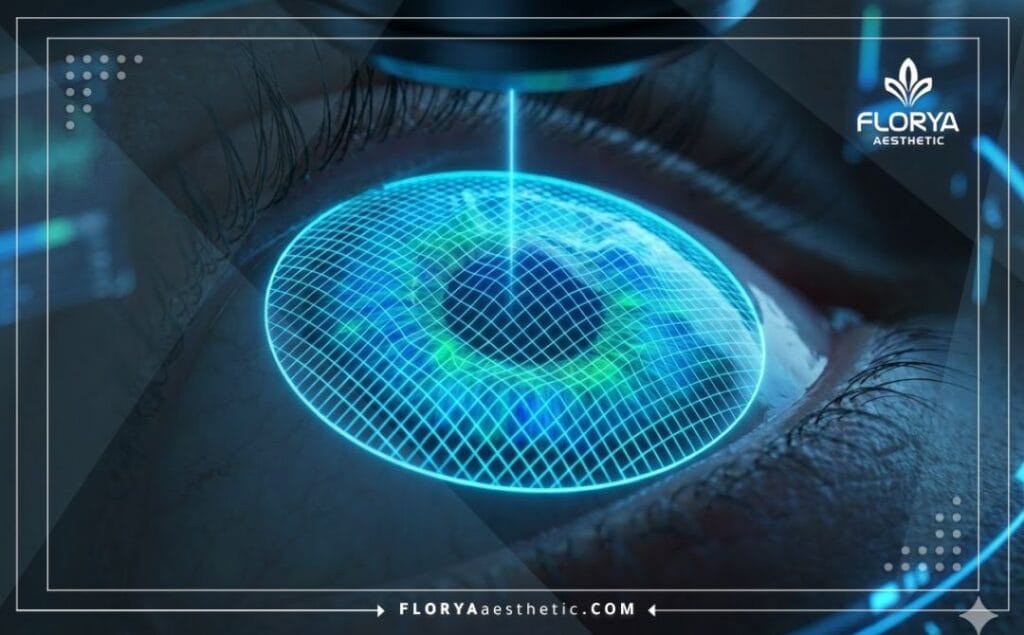
Minimizing Dry Eye Treatment Risks Turkey is the core philosophy at Florya Aesthetic, where we implement European-standard safety protocols. Florya Aesthetic utilizes the advanced IDRA and Keratograph 5M diagnostic systems to map the Meibomian glands with micron-level precision, ensuring that only suitable candidates proceed to treatment, thereby eliminating trial-and-error risks.
Our commitment to your ocular safety includes:
- Board-Certified Surgeons: Specialists with international experience.
- FDA-Approved Technology: Using only Lumenis M22 IPL and LipiFlow.
- Clean-Room Protocol: HEPA-filtered environments for all procedures.
- Comprehensive Screening: 3D mapping of the ocular surface.
- Post-Op Monitoring: Digital follow-ups after you return home.
- Transparent Pricing: No hidden costs affecting care quality.
- Multilingual Support: Clear communication of medical instructions. Choosing a reputable provider is your best defense against Dry Eye Treatment Risks Turkey.
Detailed Breakdown: Risk Ratios & Cost
Evaluating Dry Eye Treatment Risks Turkey requires a comparative look at global standards and pricing to understand the value proposition. The table below illustrates how Turkey offers premium medical technology at a fraction of the European cost, without compromising on safety standards, provided you choose a certified clinic.
| Procedure Type | Safety Profile | Turkey (Florya) | UK / Europe | USA |
| IPL Therapy (Lumenis) | High (98% Safe) | €150 – €250 | €500 – €800 | €600 – €900 |
| LipiFlow Thermal Pulsation | Excellent (96%) | €300 – €500 | €800 – €1200 | €1000 – €1500 |
| Punctal Plugs (Silicone) | Good (90%) | €100 – €180 | €300 – €500 | €400 – €700 |
| BlephEx Eyelid Cleaning | Very High (99%) | €90 – €150 | €250 – €400 | €300 – €500 |
| Autologous Serum Drops | Natural/No Risk | €150 – €250 | €500 – €800 | €600 – €1000 |
| Surgical Punctal Cautery | Moderate (85%) | €400 – €700 | €1500 – €2500 | €2000+ |
This financial and risk analysis confirms that Dry Eye Treatment Risks Turkey are managed effectively alongside significant cost savings.
Safe Treatment Protocol Steps
Reducing Dry Eye Treatment Risks Turkey involves a strict adherence to a standardized medical workflow. The procedure begins with the application of protective ocular shields and cooling gel, followed by precise light pulses targeting the telangiectasia in the eyelids, and concludes with manual expression of the glands to restore healthy oil flow.
Step-by-step safety protocol:
- Anesthesia: Numbing drops applied to prevent discomfort.
- Shielding: Metal eye shields inserted to protect the retina.
- Coupling: Cooling gel applied to conduct energy safely.
- Treatment: Calibrated light pulses applied to upper/lower lids.
- Expression: Gentle forceps used to clear blocked glands.
- Lavaging: Saline wash to remove debris and bacteria.
- Soothing: Collagen mask applied to reduce redness. Rigorous execution of these steps neutralizes Dry Eye Treatment Risks Turkey.
“The perception of risk often stems from a lack of understanding. Modern dry eye treatments like IPL do not touch the eye globe itself but treat the surrounding eyelids. At Florya Aesthetic, we prioritize the integrity of the corneal surface above all else, ensuring that patients leave with better vision, not just better comfort.”
— Senior Ophthalmologist at Florya Aesthetic
High-Risk Candidates & Preparation
Certain patient profiles may face elevated Dry Eye Treatment Risks Turkey and require a tailored approach. Patients with Fitzpatrick skin types V and VI (very dark skin) require specialized filters during IPL treatment to prevent hypopigmentation, while those with active ocular herpes must undergo antiviral prophylaxis before any thermal procedure.
Candidates requiring special attention include:
- Pregnant Women: Hormonal shifts make results unpredictable.
- Epilepsy Patients: Flashing lights from IPL may trigger seizures.
- Keloid Formers: Risk of scarring with invasive procedures.
- Recent Retinoids: Must stop oral isotretinoin for 6 months.
- Photosensitivity: Medication-induced sensitivity to light.
- Active Infections: Conjunctivitis must be fully resolved.
- Unrealistic Expectations: Psychological readiness is key. Screening for these factors effectively manages Dry Eye Treatment Risks Turkey.
Balancing Benefits vs. Risks
Weighing Dry Eye Treatment Risks Turkey against the potential life-changing benefits helps patients make an informed decision. While minor side effects like temporary redness are possible, the risk of leaving dry eye untreated—such as corneal ulcers and permanent vision degradation—is far more dangerous than the treatment itself.
| Pros (Benefits) | Cons (Potential Risks) |
| Immediate relief from grittiness and burning. | Mild swelling of eyelids for 24-48 hours. |
| Restoration of tear film stability. | Temporary skin redness (Erythema). |
| Reduction in dependency on artificial tears. | Need for multiple sessions for optimal results. |
| Prevention of long-term corneal damage. | Slight discomfort during gland expression. |
| Cosmetic reduction of eyelid redness/veins. | Rare risk of pigment changes in dark skin. |
This balance sheet clearly shows that Dry Eye Treatment Risks Turkey are outweighed by the clinical advantages.
Sterilization & VIP Prevention Services
Dry Eye Treatment Risks Turkey are virtually eliminated through the implementation of hospital-grade sterilization protocols. Florya Aesthetic employs single-use instruments for gland expression and strictly adheres to international sterilization standards, ensuring that cross-contamination is a statistical impossibility within our facility.
Our hygiene and safety measures include:
- Autoclave Sterilization: For all non-disposable tools.
- Single-Use Kits: For punctal plugs and LipiFlow activators.
- Air Filtration: High-grade HVAC systems in treatment rooms.
- Staff Hygiene: Strict scrubbing protocols for all medical staff.
- Surface Disinfection: Between every single patient consultation.
- Patient Education: Hygiene kits provided for post-op care.
- Contactless Check-in: Minimizing physical contact points. These VIP measures serve as a fortress against Dry Eye Treatment Risks Turkey.
Common Myths About Dry Eye Procedures
Misinformation often exaggerates Dry Eye Treatment Risks Turkey, causing unnecessary fear among potential patients. A common myth is that IPL treatment can blind a patient; however, the light energy is focused entirely on the skin of the eyelids and never penetrates the eye itself due to the protective metal shields used during the session.
Debunking prevalent myths:
- Myth: The treatment is extremely painful.
- Fact: Most patients report only a mild snapping sensation.
- Myth: Results are permanent after one session.
- Fact: Maintenance sessions are usually required annually.
- Myth: Lasers thin the eyelid skin.
- Fact: IPL actually stimulates collagen and thickens skin.
- Myth: You cannot fly after the procedure.
- Fact: Flying is safe immediately after treatment.
- Myth: Turkey uses outdated technology.
- Fact: Turkey often adopts FDA-tech faster than the EU. Clarifying these points helps contextualize Dry Eye Treatment Risks Turkey.
Recovery Timeline & Warning Signs
Managing Dry Eye Treatment Risks Turkey involves understanding the normal healing process versus signs that require medical attention. Recovery is typically rapid, with most patients returning to social activities immediately, though avoiding direct sunlight and strictly adhering to the prescribed anti-inflammatory drops is non-negotiable for the first few days.
The typical recovery trajectory:
- Hours 0-4: Mild stinging or “sunburn” sensation on lids.
- Day 1: Redness subsides; vision remains clear.
- Day 3: Full comfort; noticeable improvement in moisture.
- Day 7: Optimal results visible; glands functioning well.
- Warning Sign: Intense pain or throbbing in the eye.
- Warning Sign: Sudden decrease in visual acuity.
- Warning Sign: Green or yellow discharge (infection). Monitoring this timeline ensures full control over Dry Eye Treatment Risks Turkey.
Real Patient Stories
Hearing how others navigated Dry Eye Treatment Risks Turkey provides reassurance and social proof of safety. “I was terrified of lasers near my eyes,” says (Emma, 42 from London). “But the team at Florya explained the safety shields. I felt nothing but warmth, and for the first time in years, I woke up without my eyelids sticking together.” Similarly, (Mark, 55 from Dubai) notes: “The hygiene standards were higher than clinics I’ve visited in Europe.”
Patient experiences highlighting safety:
- The Skeptic: Overcame fear of infection through transparent protocols.
- The Complex Case: Safely treated despite history of LASIK.
- The Traveler: Flew home comfortably the next day. These narratives prove that Dry Eye Treatment Risks Turkey are manageable and rare.
International Safety Standards & Hidden Costs
Dry Eye Treatment Risks Turkey can sometimes include financial risks if patients choose unregulated clinics offering “too good to be true” prices. Global health organizations warn against “black market” clinics; reputable providers must adhere to JCI or local Ministry of Health accreditations. (According to the WHO, patient safety standards are the primary indicator of successful medical outcomes globally).
Checklist for verifying safety and costs:
- Accreditation: Look for ISO or JCI certification seals.
- Experience: Verify the surgeon’s years of practice.
- Package Clarity: Ensure medication is included in the price.
- Equipment: Ask for the brand name of the laser (e.g., Lumenis).
- Follow-up: Is there a remote consultation included?
- Insurance: Does the clinic have malpractice insurance?
- Reviews: Check independent platforms like Trustpilot. Vigilance here protects you from both medical and financial Dry Eye Treatment Risks Turkey.
Pro Tips for Minimizing Side Effects 💡
To completely bypass Dry Eye Treatment Risks Turkey, you need insider advice that goes beyond the standard brochure. Look, the doctor does 50% of the work, but you do the rest. The biggest mistake patients make is skipping the warm compresses after they get home. The glands need help to stay open! Also, bring high-quality UV400 sunglasses—Istanbul sunshine is strong, and your lids will be sensitive.
Expert tips for a smooth journey:
- Hydrate: Drink 3 liters of water before your session.
- Omega-3: Start high-dose supplements 2 weeks prior.
- Lid Hygiene: Use tea tree oil wipes daily before the trip.
- Blink Exercises: Practice conscious blinking to retrain muscles.
- Avoid AC: Direct air conditioning is your enemy post-op.
- Digital Detox: Limit phone use for 24 hours after treatment.
- Pillow Talk: Sleep on your back to avoid pressure on eyes. Applying these tips practically erases Dry Eye Treatment Risks Turkey.
Differential Analysis: Laser vs. Traditional Drops
Analyzing Dry Eye Treatment Risks Turkey involves comparing modern interventions with traditional conservative management. While artificial tears pose zero surgical risk, they often contain preservatives like Benzalkonium Chloride (BAK) which can cause toxic epithelial damage over years of use, making the one-time minimal risk of IPL a safer long-term bet.
| Feature | IPL / LipiFlow Treatment | Traditional Eye Drops |
| Mechanism | Treats the root cause (Glands) | Masks symptoms temporarily |
| Long-term Risk | Minimal (Rare burns) | High (Preservative toxicity) |
| Convenience | Freedom from daily hassle | Constant application needed |
| Cost Efficiency | High upfront, low long-term | Low upfront, high lifetime cost |
| Efficacy | 85-90% Symptom Reduction | Variable/Short-acting |
| Safety | High (in expert hands) | High (if preservative-free) |
This comparison highlights why accepting the low Dry Eye Treatment Risks Turkey is a worthy trade-off.
Booking Logistics & Aftercare Guarantee
Seamless logistics play a huge role in reducing Dry Eye Treatment Risks Turkey related to stress and mismanagement. Florya Aesthetic manages the entire patient journey, from VIP airport transfers to arranging accommodation near the clinic, ensuring you are never left stranded or confused. We provide a direct WhatsApp line to your medical coordinator for 24/7 peace of mind.
Your roadmap to a safe booking:
- Virtual Consult: Send close-up photos for initial assessment.
- Flight Coordination: Scheduling around your treatment window.
- Medical Visa: Assistance with documentation if required.
- Arrival: VIP transfer directly to the hotel/clinic.
- Pre-op Test: Comprehensive eye exam upon arrival.
- Treatment: Performed in a sterile environment.
- Departure: Fit-to-fly certificate provided. Structured logistics eliminate procedural Dry Eye Treatment Risks Turkey.
Conclusion
In conclusion, Dry Eye Treatment Risks Turkey are statistically negligible when you choose a world-class provider like Florya Aesthetic. We have explored the medical factors, safety protocols, and cost-benefits to provide you with a transparent overview.
Your vision is irreplaceable. By opting for accredited expertise and advanced technology, you are choosing a future free from the constant irritation of dry eyes. We invite you to experience the gold standard of ocular care. Are you ready to restore your comfort and see the world clearly again?
Frequently Asked Questions
Is dry eye treatment in Turkey painful?
No, most advanced treatments like IPL or LipiFlow are not painful. Patients typically report a mild warming sensation or a sensation similar to a rubber band snap. Topical anesthetic drops are always used to ensure comfort, effectively neutralizing pain-related Dry Eye Treatment Risks Turkey.
Can I fly immediately after the procedure?
Yes, you can usually fly the next day. Dry eye treatments are non-invasive and do not affect intraocular pressure like retinal surgeries do. However, the cabin air is dry, so using preservative-free lubricant drops during the flight is essential to avoid irritation.
What happens if the treatment doesn’t work?
While success rates are high (over 85%), some patients with severe gland atrophy may need multiple sessions. At Florya Aesthetic, we perform a thorough initial assessment to manage expectations and only treat candidates who are viable for improvement, reducing Dry Eye Treatment Risks Turkey related to failure.
Are the lasers used in Turkey the same as in the UK/USA?
Yes, reputable clinics in Turkey use the exact same FDA-approved technology (such as Lumenis M22 or Johnson & Johnson LipiFlow) found in top Western clinics. The lower cost is due to operational economics, not inferior equipment.
How long do the results last?
Results typically last from 6 months to over a year, depending on the severity of the condition and patient lifestyle. A maintenance session once a year is recommended to keep the Meibomian glands functioning optimally and prevent regression.